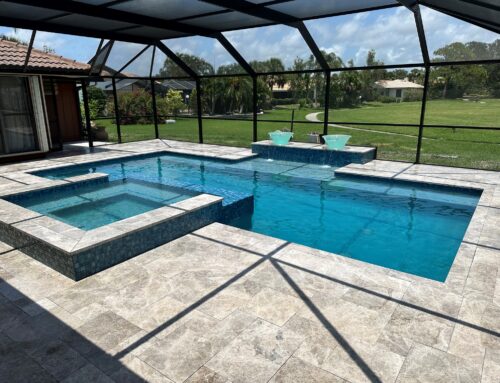
When it comes to pool resurfacing and renovation, the quality of the surface preparation determines how long your new finish will last. In Sarasota and surrounding areas, many homeowners face the decision between hydroblasting – the modern, high-pressure water technique – and older methods like sandblasting or over-laminating.
While traditional methods have been used for decades, hydroblasting has quickly become the industry standard for premium pool renovations. It provides a cleaner, stronger surface bond and reduces the risk of future peeling, cracking, and maintenance problems.
In this article, we’ll break down how hydroblasting compares to traditional resurfacing techniques, explain why it’s the superior option for long-term results, and show how Better Pools & Spas uses it to deliver durable, flawless finishes for Sarasota homeowners.
Understanding Pool Resurfacing and Surface Preparation
Before diving into the differences, it’s important to understand what surface preparation actually does. When a pool is resurfaced, the old finish – whether plaster, pebble, or tile – must be removed or properly bonded to ensure the new material adheres securely.
Poor surface prep can lead to:
- Peeling and delamination (where the new surface separates from the old).
- Uneven textures and discoloration.
- Structural issues that lead to costly repairs.
This step is what separates a pool renovation that lasts 15 years from one that starts deteriorating after just a few seasons.
What Is Hydroblasting?
Hydroblasting (also known as water jetting) is a high-pressure cleaning and stripping process that uses jets of water – up to 40,000 PSI – to remove old pool coatings and contaminants from the concrete shell.
Unlike mechanical tools or chemicals, hydroblasting relies solely on the power of pressurized water to achieve a clean, bondable surface without damaging the underlying structure.
How It Works:
- The process begins by draining and inspecting the pool.
- Specialized hydroblasting equipment directs water jets at the surface, removing plaster, debris, and weak materials.
- The result is a clean, slightly textured surface ideal for applying a new finish.
This method ensures maximum adhesion for the new coating – creating a bond so strong it’s virtually immune to the peeling and flaking that often plague traditional resurfacing jobs.
Traditional Pool Resurfacing Methods (and Their Drawbacks)
Before hydroblasting became widely available, pool contractors relied on techniques like sandblasting, acid etching, and over-laminating to prepare pool surfaces. While these methods can still be effective in some cases, they come with significant limitations.
1. Sandblasting
Sandblasting uses compressed air and abrasive materials to remove the old surface. While it’s effective at stripping coatings, it creates uneven textures, generates large amounts of dust, and can damage the pool shell if not performed carefully.
Drawbacks:
- Inconsistent surface texture.
- Messy, dusty, and environmentally unfriendly.
- Risk of microfractures in the pool shell.
- Often requires additional acid washing afterward.
2. Acid Etching
This chemical process involves applying muriatic acid to roughen the pool surface. It’s typically used for light resurfacing but doesn’t remove old material or contaminants.
Drawbacks:
- Surface preparation is minimal – adhesion is often weak.
- Chemical runoff poses environmental hazards.
- Can lead to premature surface failure.
3. Over-Laminating
Over-laminating involves applying a new coating directly over the existing surface without removing it. While this may seem like a shortcut, it traps old layers beneath the new one, creating bonding issues and future peeling.
Drawbacks:
- The weakest bond of all resurfacing methods.
- Prone to bubbling and flaking within a few years.
- Adds unnecessary thickness that can distort pool shape or depth.
These traditional methods have one thing in common: they don’t address the root cause of surface failure.Hydroblasting, by contrast, removes everything down to a clean, structurally sound base.
Why Hydroblasting Outperforms Traditional Methods
Hydroblasting has become the go-to choice for luxury pool builders and renovation experts because it offers unmatched precision, durability, and environmental benefits.
1. Superior Adhesion and Durability
The high-pressure water stream removes even microscopic debris, leaving behind a surface that’s rough enough for new material to grip – but not damaged. This ensures a tight, chemical-free bond that lasts for years.
2. Cleaner, Healthier Process
Unlike sandblasting, hydroblasting doesn’t produce dust or airborne contaminants. It’s safer for workers, nearby landscaping, and homeowners.
3. Reduced Maintenance Over Time
Pools resurfaced with hydroblasting stay smooth and durable longer. The strong bond minimizes chipping, staining, and the need for early refinishing – saving Sarasota homeowners thousands over the life of their pool.
4. Environmentally Friendly
Hydroblasting uses only water – no chemicals or abrasives – making it eco-conscious and ideal for Florida’s environmentally sensitive regions.
5. Faster and More Efficient
Because hydroblasting leaves behind a ready-to-apply surface, the overall renovation timeline is shorter, allowing Better Pools & Spas to complete resurfacing projects efficiently without sacrificing quality.
The Hydroblasting Process at Better Pools & Spas
At Better Pools & Spas, hydroblasting is a key part of every pool renovation and resurfacing project. Our 90% in-house construction team ensures precision at every stage – without relying on subcontractors.
Our Process Includes:
- Inspection & Preparation – We assess your pool’s condition to identify cracks or weak points.
- Hydroblasting – Old finishes are removed cleanly, exposing solid concrete ready for resurfacing.
- Surface Application – Premium materials like PebbleTec, quartz, or plaster are applied evenly.
- Final Detailing & Curing – The new finish is smoothed, sealed, and prepared for long-term performance.
This process guarantees that every renovated pool in Sarasota and surrounding areas not only looks stunning but performs flawlessly for decades.
Hydroblasting vs. Sandblasting: Side-by-Side Comparison
| Feature | Hydroblasting | Sandblasting / Traditional Methods |
| Surface Cleanliness | 100% debris-free, optimal bonding surface | Leaves behind dust and residue |
| Durability | Superior, long-lasting adhesion | Prone to peeling or flaking |
| Environmental Impact | Eco-friendly, water-based | Produces dust and waste |
| Precision | Controlled and even | Risk of uneven texture or damage |
| Maintenance Needs | Minimal over time | Frequent resurfacing required |
| Aesthetic Quality | Smooth, uniform results | Potential for patchy or uneven finishes |
When it comes to quality, longevity, and environmental responsibility, hydroblasting is the clear winner.
Why Better Pools & Spas Uses Hydroblasting Exclusively
At Better Pools & Spas, we believe in doing things the right way, not the easy way. That’s why we exclusively use hydroblasting for all resurfacing and renovation projects.
Our Commitment Includes:
- No subcontractors – just skilled in-house professionals.
- No price increases after contract signing.
- Industry-leading materials and techniques for long-term durability.
Hydroblasting aligns perfectly with our promise of quality, transparency, and craftsmanship – ensuring Sarasota homeowners enjoy pools that look stunning and last for years.
Hydroblasting – The Modern Standard for Pool Renovations
Whether you’re updating an aging pool or resurfacing for a new look, your choice of technique will determine the outcome’s quality and longevity. Hydroblasting delivers cleaner, stronger, and longer-lasting results – making it the preferred choice for homeowners who want the best in craftsmanship and durability.
If you’re ready to transform your pool with the most advanced resurfacing technology in Sarasota, contact Better Pools & Spas today to schedule your renovation consultation.
Call (941) 467-6049 or complete our online form to learn more.